Our Church
In October 2023, a small group of believers in Champaign, Illinois began gathering for monthly Holy Communion under the spiritual leadership of Rev. Johnson Varughese. What began as a humble ecumenical fellowship soon blossomed into a thriving congregation, nurtured by prayer, united in purpose, and guided by faith.
After completing 39 years of devoted ministry in the Mar Thoma Church, Rev. Johnson Varughese retired and moved to Champaign to reside with family. During this time, he observed the absence of a Mar Thoma church for the Malayalee Christian community in the area. Recognizing the spiritual need within the growing student and professional population of Champaign–Urbana, he initiated steps to form a congregation.
With the approval of the Diocesan Bishop, Rt. Rev. Dr. Abraham Mar Paulos, and the Mar Thoma Synod, the fellowship was granted congregational status on March 1, 2025, and Rev.Johnson Varughese was appointed as the first vicar.
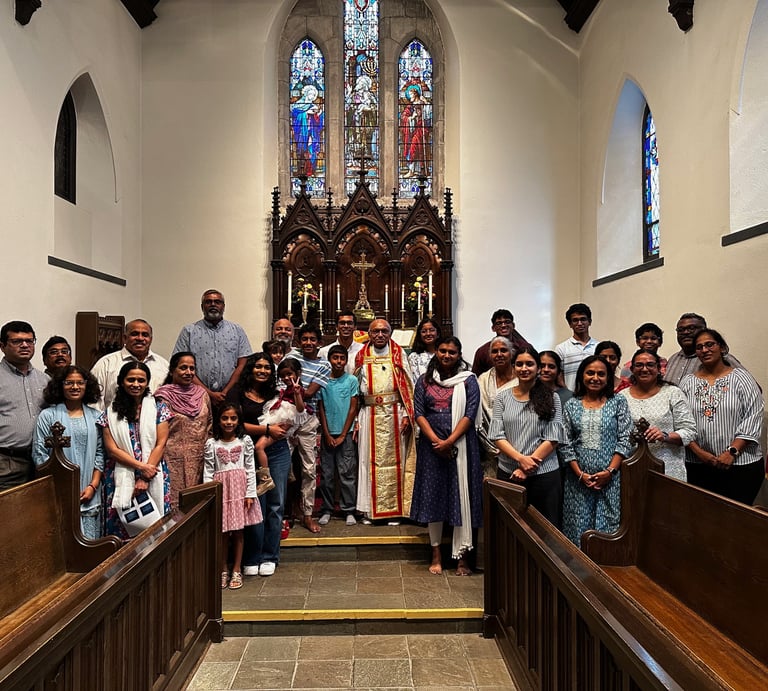
The official inauguration of the Mar Thoma Congregation, Champaign was held on Sunday,September 21, 2025, at 2:00 p.m. with a Holy Communion service led by the Diocesan Episcopa, Rt. Rev. Dr. Abraham Mar Paulos Thirumeni.
"
Our Diocesan Bishop
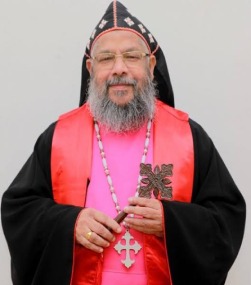
Rt. Rev. Dr. Abraham Mar Paulos Episcopa is a distinguished spiritual leader, theologian, and scholar whose impactful ministry has significantly shaped the Mar Thoma Church and its global outreach.
Born on August 16, 1953, to Kanjirathara K.C. Uthup and Sosamma of Kottayam Manganam St. Peter’s Mar Thoma Parish, Rt. Rev. Dr. Abraham Mar Paulos Episcopa (Rev. Dr. K.U. Abraham) pursued his early education at Muttampalam Government L.P. School and Kottayam M.T. Seminary High School. He continued his higher studies at CMS College, Kottayam Baselios College, and University of Allahabad before undertaking theological education at the Mar Thoma Theological Seminary, Kottayam.
He was ordained as a Semmash (Deacon) on May 31, 1980, and as a Kaseessa ( Priest) on June 28, 1980. His passion for theological education and spiritual formation led him to Princeton Theological Seminary for higher studies, culminating in a doctorate in Christian Education from Boston University. After serving serval parishes and holding various responsibilities, the Church selected him to be the bishop of the Church.
On February 11, 2005, he was consecrated as a Ramban by Geevarghese Mar Athanasius Thirumeni at Kottayam Jerusalem Mar Thoma Church. He was later elevated to the episcopacy with the title Mar Paulos Episcopa on May 14, 2005, by Padmabhooshan Most Rev. Dr. Philipose Mar Chrysostom Mar Thoma Valiya Metropolitan at Syrian Christian Seminary, Thiruvalla.
From an early age, Bishop Dr. Abraham Mar Paulos was actively engaged in public and ecclesiastical service, beginning with his involvement in the Akhila Kerala Balajana Sakhyam, a student social service organization in Kerala. His exceptional leadership qualities were evident through his tenure as the General Secretary of the Mar Thoma Sunday School Samajam, where he played a pivotal role in organizing Children’s Maramon as part of the centenary celebrations of the Sunday School Samajam. As the President of the Mar Thoma Suvishesha Sevika Sangham during its centenary celebrations, he organized the World Mar Thoma Women’s Meet, further strengthening the Church’s commitment to empowering women in faith and service. His influence extended beyond the Church, serving as the Chairman of the Socio-Political Commission of the Church, Director Board Member of CMC Ludhiana and SHIATS University, Vice President of the Bible Society of India, Delhi Auxiliary, Chairman of Dharmajyoti Vidyapeet Seminary.
Bishop Dr. Abraham Mar Paulos has served as the Diocesan Bishop for several regions, including Chengannur-Mavelikkara, Thiruvananthapuram-Kollam, Mumbai-Delhi, Adoor, and Kottayam- Kochi. On January 1, 2024, he was appointed as the Diocesan Bishop of the Diocese of North America.
His leadership extends globally as the member of Central Committee and Executive Committee of the World Council of Churches (WCC), positioning the Mar Thoma Church as a vital participant in ecumenical dialogues and collaborations. He is also the Executive Committee Member & Working Committee Member of Bible Society of India. Through this role, he has strengthened the Church’s presence in the global Christian community, fostering interfaith understanding and unity.
Renowned for his scholarship, eloquence, and unwavering commitment to social justice, Bishop Dr. Abraham Mar Paulos has been a guiding force in expanding the Church’s presence and engagement with contemporary issues. His extensive academic experiences across both Eastern and Western theological traditions provide him with a unique perspective that continues to inspire and enrich the lives of countless individuals. With a deep affinity for the youth and a nurturing spirit towards children, he envisions the Diocese as a dynamic nexus fostering holistic growth and spiritual development.
Our Vicar
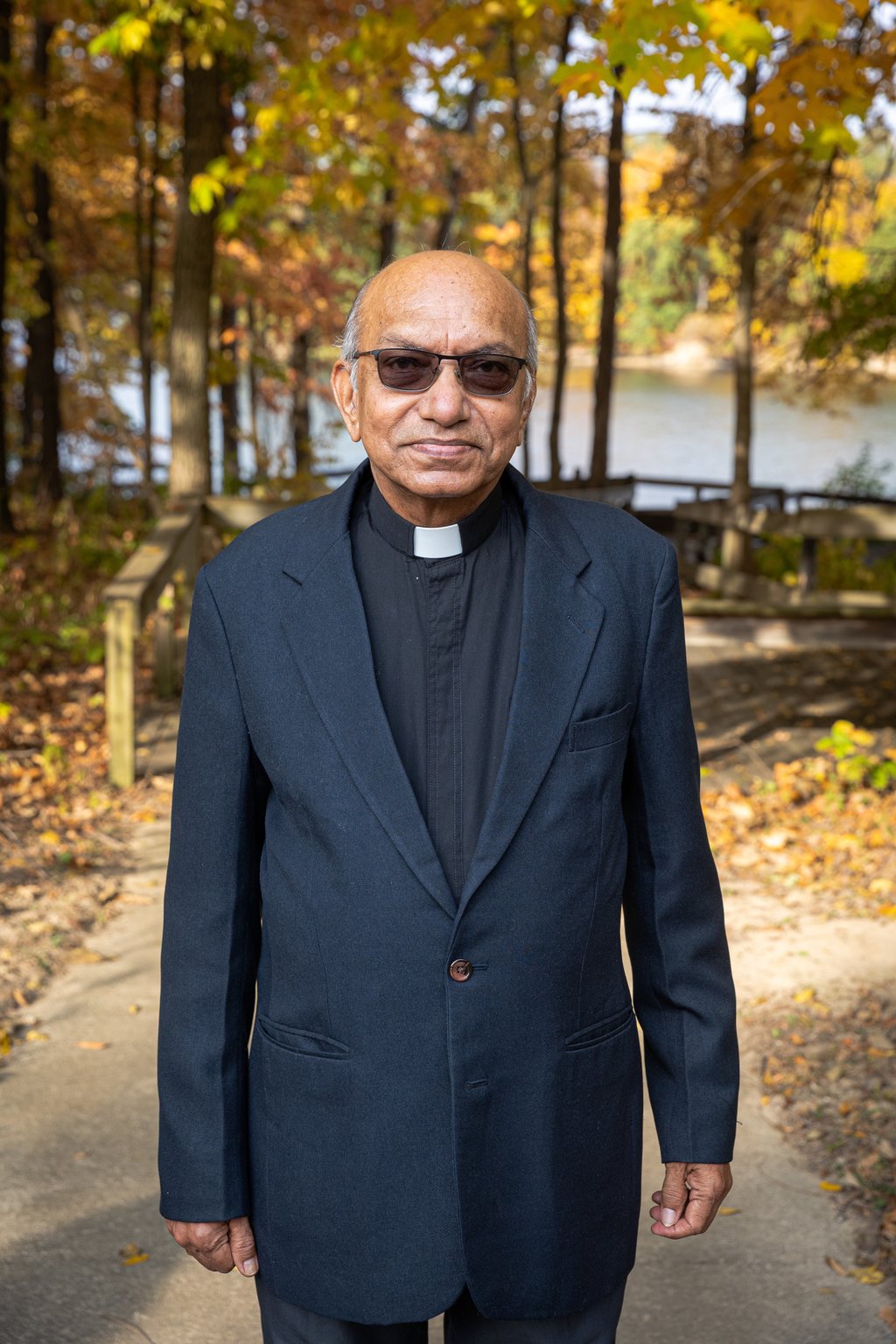
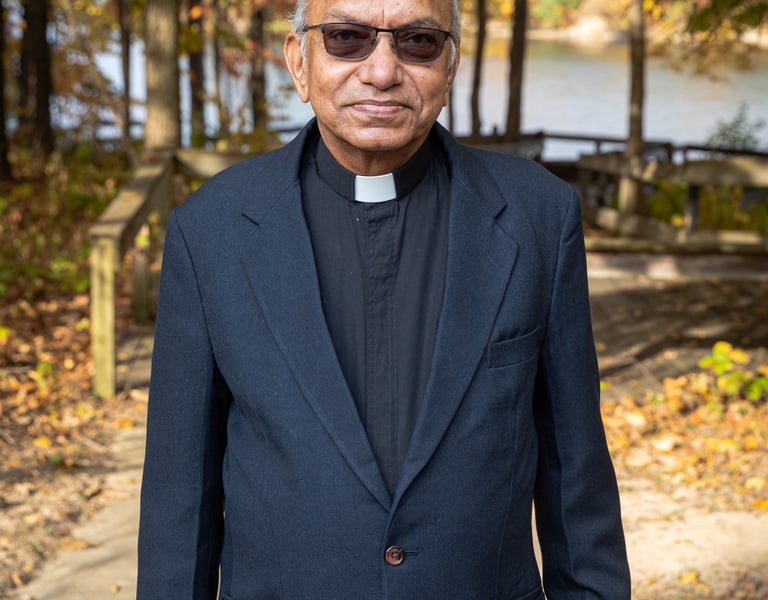
Rev. Johnson Varughese, our Vicar, is a native of Venmoney, Kerala, India. He was settled at Kalamassery Ernakulam. He is a retired priest of our church with 45 years of service. He was retired in 2020 after 39 years of active service.
He had served in different parishes of the church. He has served as South Travancore Missionary and North Travancore missionary. He served as the Travelling Secretary of the Mar Thoma Evangelistic Association. He worked as vicar at Aluva, Kalamassery, Palarivattom, Kothamangalam Perumbavoor, Keezhillam, Chungathara, New York St Thomas, Vadasserikkara St. John's, Kozhencherry St. Thomas, Thevalakara, Hebron, and Kurathikad Jerusalem. His wife Prof. Dr. Aleyamma Saji Varughese, was professor and principal of Mar Thoma College for Women, Perumbavoor, she passed away in 2022.
He is now staying at Chicago with his daughters Pretty, Priya and Nancy families.
Our Heritage
The Origins of Christianity in Kerala
According to tradition, St. Thomas, a disciple of Jesus Christ, brought Christianity to India as the disciples went to different parts of the world in accordance with the commission given to them by Jesus Christ. A South Indian tradition is a well-known legend involving the arrival of Saint Thomas in India which asserts that Saint Thomas arrived in Malankara. Around AD 52, St Thomas landed in Cranganore near Cochin
This tradition was supported by trade and maritime routes between India and the Middle East. The writer, F. E. Keay, in his book, ‘A History of the Syrian Church in India’, has established, from the mention in the book of Kings, of the articles brought to the court of King Solomon from India, that even before the time of Christ, there was trade between the Malabar Coast and Palestine in spices and luxury articles like ivory.
The Seven Churches of St. Thomas
The South Indian tradition as a living and powerful tradition to the Syrian Christians of Kerala that their identity hinges on the arrival of St. Thomas. In the true Apostolic tradition St. Thomas preached first to the Jewish settlers in and around Cochin and then worked among the Hindus. Through the ministry of the Word and the many miracles which tradition attributes to him, he brought many high caste Hindus to the Christian faith. It is believed that he organized seven Christian communities for the use of these Christians and ordained from four families.
Historical Significance of the Seven Churches
The seven churches were: Cranganore (Malankara), Chavakad (Palur), Parur near Alwaye, Gokamangalam, Niranam, Nilakkal (Chayal), Quilon (Kalyan). All these places except Nilakkal are near the seacoast. Nilakkal is in the ghat region near Sabarimala, the Hindu place of pilgrimage. Later, a Church has been built under the joint auspices of all the Christian denominations of Kerala at the site agreed upon by all concerned. This Church has historical significance as the first Church built and dedicated by all the denominations together as a symbol of the heritage from St. Thomas.
Martyrdom and Legacy of St. Thomas
After crossing the southern peninsula to the Coromandel or East coast, St. Thomas was martyred and buried in Mylapore, Chennai, in 68 CE.
The Role of Tradition in Christian History
Dr. Juhanon Mar Thoma Metropolitan concludes the Chapter on the St. Thomas Tradition in his book Christianity in India and a Brief History of the Mar Thoma Church as follows:
“The History of the Christian Church in the first century does not depend entirely on historical documents. Tradition is often more true and more compelling than plain historic proof. In this sense St. Peter’s founding of the Roman Church and St. Thomas’ founding of the Malabar Church, may be said to stand on the same footing. Both are supported by traditions which are sufficiently early and sufficiently strong”.
Early Historical Records and Christianity in India
Mention is made in the records of the Council of Nicea (AD 325), of the presence of a Bishop John of India. Jawaharlal Nehru in his ‘Glimpses of World History’ (1934) commented as follows:
“You may be surprised to learn that Christianity came to India long before it went to England or Western Europe, and when even in Rome it was a despised and proscribed sect. Within 100 years or so of the death of Jesus, Christian Missionaries came to South India by sea. They were received courteously and permitted to preach their new faith. They converted many people, and their descendants have lived there, with varying fortune, to this day. Most of them belong to old Christian sects which have ceased to exist in Europe.”
Early Christian Community and Ecclesiastical Connections
There were no written records of the ecclesial structure of the early Christian community in South India until the sixth century, According to L. W. Brown, Cosmas Indicopleustes, a sixth-century wanderer, made the earliest undisputed historical reference to a church in South India. In addition, the records of Marco Polo, the traveler; John of Monte Corvino, a Franciscan friar; Friar Jordanus, a Dominican; and John de Maignolli provide insight into the presence of a Christian community in Malankara.
Portuguese Influence and the Synod of Diamper
The Portuguese started settling in India with the coming of Vasco De Gama in AD 1498. They established their power in the 16th & the 17th centuries. This was also a period, which witnessed far-reaching effects of the missionary adventures of the Roman Catholic Church. At this time, the Portuguese were powerful in the eastern areas and had control of the sea routes. The Roman Catholic Church wanted to use this opportunity to bring the Church in Malabar under the supremacy of Rome.
A powerful Archbishop Alexio-de-Menezes arrived in Goa in 1592. He then convened a Synod at Udayamperoor, south of Ernakulam, in the year 1599, called the Synod of Diamper for commandeering obedience to the supreme Bishop of Rome. The representatives sent from various congregations were forced to accept the decrees read out by the Archbishop. Thus, the Syrian Christians of Malabar, (the Malankara Church) were made part of the Roman Catholic Church under the Pope. The Malankara Church was under Roman Empire for half a century. But many smarted under the Roman Yoke. Gradually the power of the Portuguese empire declined, and the Christians yearned for regaining independence.
The Coonan Cross Oath and the Struggle for Independence
They tried to get a prelate from one of the Eastern Churches to lead the people out of this torpid state of affairs. And when their efforts were proved futile, they declared their independence and shook off the Roman supremacy after 54 years of submission, with the ‘Oath of Coonen Cross’ on January 3, 1653. That was a historic event, which inscribed a new chapter in the history of the Church in Malabar. What they wanted was to remain loyal to their ancient faith and traditions.
The Coonan Cross Oath occurred when the Portuguese authorities prevented two bishops sent by the Patriarch of Antioch from entering India at Cochin. The agitated populace against the Portuguese marched towards a cross erected in Mattancherry and swore an oath renouncing their allegiance to papal authority.
Dr. Joseph Mar Ivanios Episcopa in the book, ‘Ecumenism in Praxis’ observed that the Coonan cross oath served as a precursor to the Indian liberation movement, which later allowed Mar Thoma Christians to stand up for reforms and rebel against the jurisdictional claims of the Antiochian Patriarch in the nineteenth century.
Dutch Influence and the Rise of the Mar Thoma Church
Eventually, in 1661, the Dutch came to dominate over Portuguese colonization. The Dutch colonial era made it possible for non-Roman bishops to visit India. As a result, in 1663, Mar Gregorios, the Antiochian bishop, consecrated Archdeacon Thomas as Mar Thoma-I, initiating the long tradition of attributing the title Mar Thoma to the supreme head of the Church. From this point onward, the Malankara Church, which was against the Portuguese, slowly began to continue the spiritual connection with the Patriarch of Antioch.
Their dream finally materialized when their Archdeacon, Thomas by name, was duly consecrated with the title ‘Mar Thoma’ in 1665 by Mar Gregorius of Jerusalem who was associated with the Jacobite Patriarchate of Antioch. Thus, the Episcopal continuity was restored with Mar Thoma-I as the first Indian Metropolitan. Thus began the relation of the Syrian Church with the Antiochene Jacobites. Because of the relationship with the Syrian Church, the Church in Malankara (Malabar) was also known as Syrian Church of Malabar.
Liturgical and Ecclesiastical Influences
The liturgical structure, vestments and practices of the Mar Thoma Church were deeply influenced by the Church of Antioch. In the preface to the liturgical book of Holy Communion, Metropolitan Titus-II Mar Thoma mentioned the belief of the Mar Thoma Church regarding the existence of a liturgical text known as Malankara Thaksa prior to the arrival of the Portuguese. During the Portuguese era, these texts were burned along with several other important liturgical documents. Nonetheless, the Church of Antioch transmitted the liturgy of Saint James to the Malankara Church. The translated St. James Liturgy is still used today, and it is the most prominent of the seven liturgies in the Mar Thoma Church. The usage of the term “Syrian” in the title of the Church — (Malankara Mar Thoma Syrian Church) denotes this influence
Bishops and Ecclesiastical Authority
Thereafter, Ten Bishops with the title of ‘Mar Thoma’ were consecrated who held ecclesiastical authority over the Malankara Church from 1653 to 1843. Of the ten Bishops, four had assumed the title Mar Dionysius.
During the time of Mar Thoma VI, who took the title of Dionysius-I, Mar Gregorios, a foreign Bishop consecrated a new Bishop with the title Mar Koorilos. Mar Dionysus raised objections and Mar Koorilos had established his seat at Thozhiyoor, near Kunnamkulam on the British Malabar border. This Church continued as an independent church from that time. This Church maintains cordial relations with the Mar Thoma Church, especially for inter-church consecration of Bishops even on date.
Missionary Influence and the Formation of the Church of England
By this time, Malankara Syrian Christians had developed close relations with the missionaries sent from Church Mission Society in London. But soon seeds of misunderstanding were sown and cracks appeared in their relationship. This gap widened and ultimately resulted in their parting of ways. With the converts they gained and with the Syrians who joined them eventually, a branch of the Church of England known as the Diocese of Travancore and Cochin was formed (1879).
Reformation Movement and Spiritual Revival
But that was not the end. There was a nucleus of people in the church who longed for the removal of unscriptural customs and practices which had crept into the church over the centuries. They envisioned a reformation in the Church in the light of the Gospel of our Lord. There were two outstanding leaders in this group, one was Palakunnathu Abraham Malpan of Maramon (1796-1845) and the other, Kaithayil Geevarghese Malpan of Puthuppally (1800-1855). Both were teachers in the Syrian Seminary (established in AD 1813 by Pulikottil Mar Dionysius) and had opportunities to come into close personal contact with the missionaries and to share their insights regarding the Christian life and the nature and functioning of the Church as depicted in the New Testament and to imbibe the ideas of the Western Reformation.
The group led by these two was very much concerned about the need of a revival in the Church.
Palakkunnathu Abraham Malpan and Kaithayil Geevarghese Malpan who spearheaded this movement, never wanted to start a separate Church. They wanted the reformation, staying within the Church. This group gradually became vocal and approached Col. Fraser, the British Resident, with a memorandum in 1836. But since nothing came of it, Abraham Malpan decided to act on his own in the parish of Maramon which was sympathetic towards his ideas of reform. He translated the liturgy of the Holy Qurbana into local language Malayalam from Syriac and eliminated from it the prayers for the dead and invocation of saints etc. He celebrated Holy Qurbana in his church using the revised St. James liturgy on a Sunday in 1836.
The Spread of Reformation and Spiritual Revival
Thus, the reformation movement was started. It was a return to the purity of the life and practice of the early Church. The emphasis on preaching the word of God led to revival meetings, which were led both by the clergy and laymen. The domination of the clergy as custodians of grace became a thing of the past. Emphasis was given to the sole mediation of Christ, importance of laity and priesthood of all believers.
More and more groups were formed for Bible study; and conventions for preaching and hearing the Word of God became common. Metropolitan Chepat Mar Dionysius was not prepared to accept such changes. So, he refused to ordain the deacons who had undergone training with Abraham Malpan. He also excommunicated Abraham Malpan. So, Abraham Malpan went to his mother-parish at Maramon. He stood strong in faith and convictions when faced with serious challenges and great difficulties. However, the whole parish stood with him. Others who favored the reforms went to hear his preaching and were strengthened by his exhortations.
Some other parishes also decided to adopt the program of reformation. Abraham Malpan realized that unless he had the support of a bishop who was sympathetic towards his reforms, there was little prospect of the movement gaining ground. So, he sent his nephew Deacon Mathew, who was then studying in Madras, to the Patriarch at Mardin in Syria. The Patriarch, being impressed with the character and ability of the deacon, in due course ordained him as priest and consecrated him as Metropolitan, with the name Mathews Mar Athanasius. The new Bishop arrived in Cochin in 1843 with credentials received from the Patriarch.
Legal Battles and the Fight for Autonomy
The new Metropolitan went to Trivandrum and tried to obtain the Royal proclamation declaring him as the Metropolitan of the Malankara Church. Chepat Mar Dionysius opposed this. Mathews Mar Athanasius got the royal proclamation in 1852 declaring him as the Metropolitan of the Malankara Church. Abraham Malpan died at the early age of 49 years in 1845. Having received the Royal proclamation, Mathews Mar Athanasius made himself more active and involved in the cause of reformation.
Years later a group led by Pulikottil Joseph Mar Dionysius who was consecrated by the Patriarch of Antioch worked vigorously against him and his attempts to continue reformation. Mathews Mar Athanasius consecrated his cousin Abraham Malpan’s son, as Thomas Mar Athanasius in 1868. The reformed party had possession of the Syrian Seminary as Mathews Mar Athanasius had been declared as the Malankara Metropolitan. The Patriarch of Antioch himself came to Kerala in 1875. A prolonged litigation followed, as to who was the rightful Malankara Metropolitan.
Mathews Mar Athanasius died in 1877, and Thomas Mar Athanasius had to carry the burden of conducting the court cases, for the possession of the Syrian Seminary and Church property. This case was decided in the royal court of appeal in Trivandrum, in 1889. Two judges decreed that Joseph Mar Dionysius was the rightful Metropolitan of the Malankara Church as he expressed allegiance to the Patriarch of Antioch. One Christian Judge gave the verdict in favor of Thomas Mar Athanasius because of his conviction that the Malankara Church has been an independent Church from the beginning.
The majority view prevailed and Thomas Mar Athanasius had to leave the Syrian Seminary and the properties there, because he upheld the autonomy of the Church. It was suggested that Thomas Mar Athanasius would be recognized as Malankara Metropolitan, if he agreed that future consecrations of Bishops should be by the Patriarch of Antioch. He did not agree to this proposal as it was against the autonomy of the Church.
Continued Legal Struggles and Spiritual Growth
Again, litigation continued for the possession of individual churches. The reform party got only Maramon and Kozhencherry churches by court decision, and the Kottarakara church without contest. Five churches were to be used by the two parties on alternate Sundays. They put up small sheds in other places to hold worship services.
Even though the reform party lost their hereditary and rightful possession, it became the occasion for the people to turn to God and to go forward in faith, trusting in the power of God. This led to a spiritual revival and great joy despite difficulties. It was this spiritual fervour which sustained the people. The Maramon Convention (Evangelistic Meeting) was started about this time in the year 1896.
The famous Maramon Convention which we have been holding annually for over a century, is a source of great spiritual power and inspiration for innumerable people. The losses were forgotten in the zeal of spiritual fulfillment. The concern for the spread of the Gospel gave momentum to the reformation movement. The successive Metropolitans of the Church also continued in the same spirit, with the help of dedicated clergy whose leadership and sacrificial lives have been deeply appreciated by the people in the Church.
The Cost of Reformation and the Expansion of the Church
Though the reformists succeeded in introducing the revised order of worship and successfully discontinued many practices, they had to pay a heavy price for achieving the desired result and had to face serious mental and financial strains arising out of the prolonged legal battles. In pursuance of the judgment handed out by the Royal Court of Appeal, Bishops consecrated by the reformists group lost control of the Malankara Church and had to vacate the Syrian Seminary at Kottayam, considered as the headquarters of the Malankara Church.
Our forefathers, however, did not lose heart. On the contrary, the material loss and humiliation suffered by them infused renewed vigour and hope in their minds and gave them the confidence to start rebuilding the Church from scratch, laying their trust in God almighty. There has been a phenomenal expansion of the Church during the last six decades, widening its frontiers to various countries of West Asia, Africa, North America and Western Europe.
Modern Structure and Activities of the Church
The Church has now 1246 parishes including congregations, divided into thirteen dioceses. There are 11 Bishops including the Metropolitan and 925 active priests (and 224 retired priests). It has a democratic pattern of administration with a representative assembly (Prathinidhi Mandalam), an executive council (Sabha Council) and an Episcopal Synod.
The Church has been active in the field of education and owns Colleges, Higher Secondary Schools, Vocational Higher Secondary School, High Schools, Training School and other educational institutions owned and managed by individual parishes.
The Church has social welfare institutions, destitute homes and Hospitals. The Mar Thoma Theological Seminary (Estd: in 1926) and other Theological Institutes cater to the theological education of both the clergy and the laity. Further, there are Study Centers, for arranging regular study programs and to provide opportunities for creative dialogue between church and society on various ethical, moral, social and religious issues.
The religious education of children is looked after by the Christian Education Department – the Sunday School Samajam (organized in 1905) and the work among youth is carried on by the Youth Department – the Yuvajana Sakhyam (organized in 1933). The Church has a women’s department — the Mar Thoma Suvisesha Sevika Sanghom (organized in 1919) which is vigorously active.
The Church actively participates in the programs of the World Council of Churches, the Christian Conference of Asia, the National Council of Churches and the Kerala Christian Council. It is in full communion with the Anglican Church, The Church of South India and the Church of North India and has cordial relations with the various denominations of the Christian Church. The Church actively cooperates with the C.S.I. and the C.N.I. through CCI (Communion of Churches in India).
Connect
Join us Sundays 1-4 PM at Emmanuel Memorial
Contact
Follow
© 2025. All rights reserved.